This week,New Yorkpublished a massiveguide to conscientious eating。总结:很难吃佛od that doesn’t in some way wreak havoc on the environment, or your body, or some poor animal that has no idea its ultimate destination is your dinner plate. Even critic Adam Plattwondered whether it’s possible to eat anything at all that isn’t in some way坏。
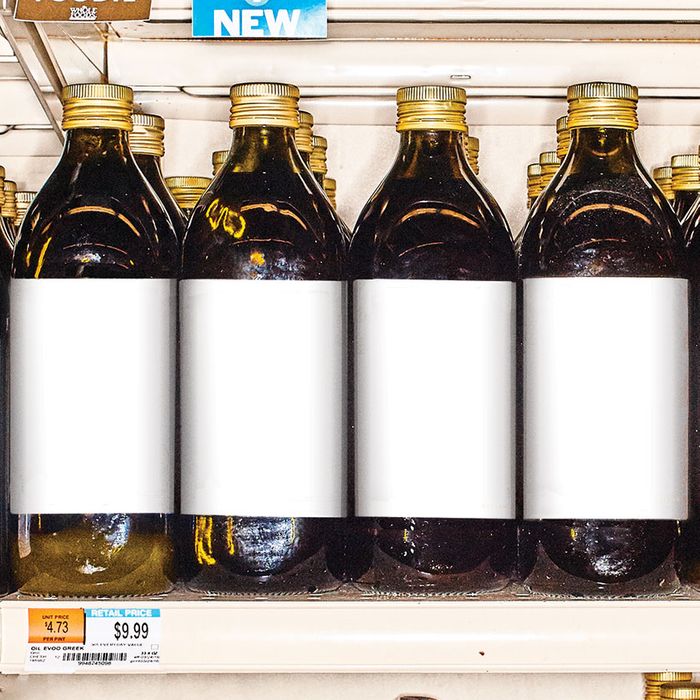
As if all of that weren’t grim enough, this week also saw the release of a book calledReal Food Fake Food, wherein journalist Larry Olmsted lays out his argument for why “you don’t know what you’re eating.” He makes a compelling case. The “extra virgin” olive oil in your grocery store? It’s almost certainly something else. The “Kobe” beef you just paid hundreds of dollars to eat for dinner? Not the real deal. And, of course, there’s packaged Parmesan cheese that’s cut with filler like cellulose (a.k.a. the dreaded “woodpulp”).
Food fraud is so pervasive, it seems, that it can leave anyone wondering: Just what in the hellareyou supposed to eat? To help answer that question, Platt and Grub editor Alan Sytsma sat down to lunch with Olmsted to get his take on things in this week’s episode of theGrub Street Podcast。Download it on iTunes, or if you’d prefer to be terrifiedimmediately, listen to it righthere: