
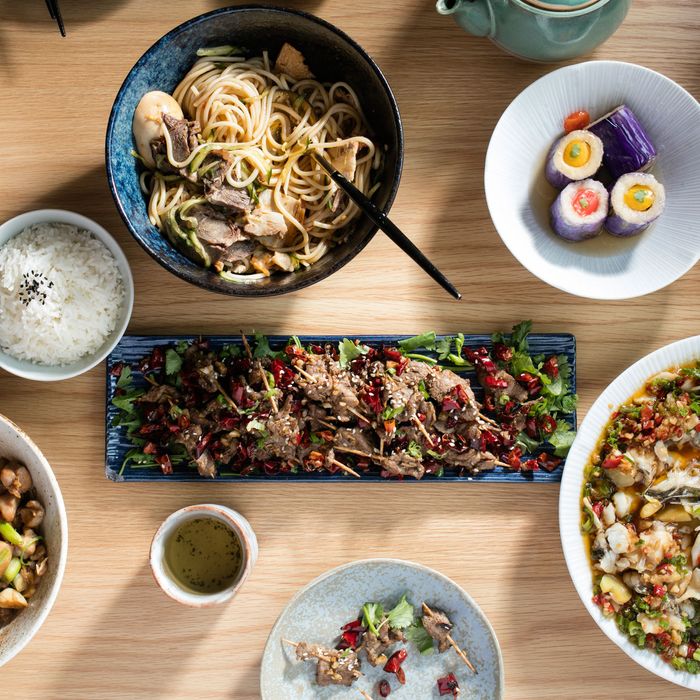
纽约’s increasingly pricey, fraught dining landscape is filled with many challenges these days, but for lovers of that old totem of the local dining scene, Chinese food, the eating has never been better. Thanks to an influx of sophisticated young chefs and restaurateurs from the old country, the city is awash in more traditional and fusion delicacies than at any time since the Great Sesame Noodle Awakening of the mid-1960s. This is especially true down in the East Village, a region that my colleagues at the Underground Gourmet have christened“唐人街北。”在东14街下方的大道徘徊,您会发现云南大米餐厅(小钳子,,,,Dian Kitchen), Taiwanese beef-soup parlors (唐,,,,何食), newfangled “dry pot” and shellfish-boil establishments (Málà Project,,,,Le Sia),一站式商店为一个名副其实的节日举办了饺子,米锅和粘稠的甜点,这些节日在台北,北京和香港等蓬勃发展的食品首都街上很受欢迎。
在许多充满活力的新东村社区中,最新的,也是许多方面的补充,是一个被任命为Lower First First Avenue的豪华餐厅,称为Hunan Slurp。Hunan is a South China province famous, among history scholars, as the birthplace of Chairman Mao, and among American Chinese-food scholars as the home of the immortal General Tso, for whom New York’s favorite addictive, crispy-sweet carryout chicken dish is named. There’s no record of General Tso’s chicken in the actual Hunanese culinary canon, of course (like many beloved local Chinese favorites, it was invented in Taiwan), although the province is well known for its bounty of rich, gently simmered pork dishes, its impressive repertoire of “mi fen” rice noodles, and a taste for the kind of spicy pyrotechnics favored by the louder, more rambunctious neighbors to the west, in Sichuan.
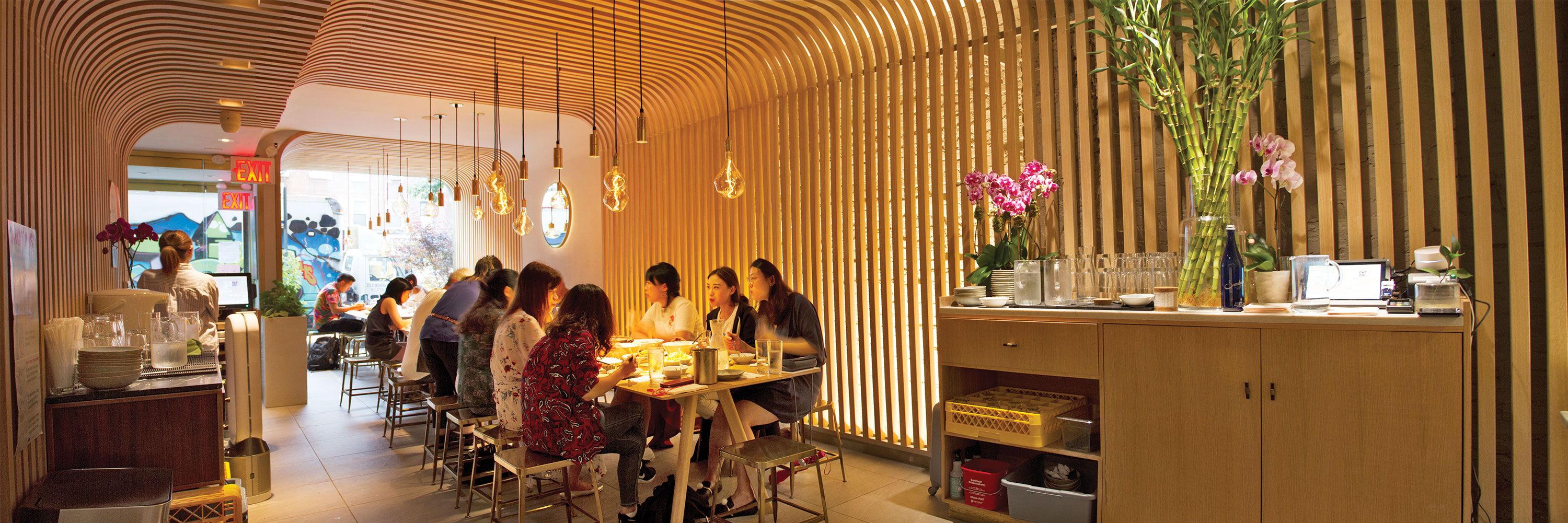
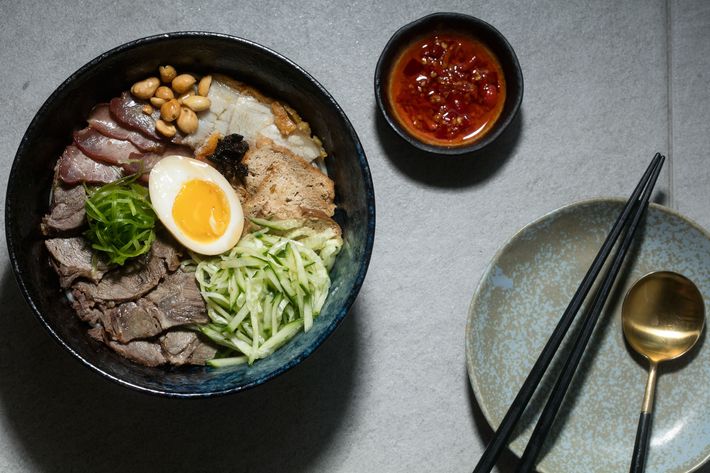
霍南·斯尔普(Hunan Slurp)的老板是一位年轻的艺术家,又名叫乔·王(Chao Wang)的厨师,正如该餐厅的网站所解释的那样,他“试图通过烹饪来治愈自己的乡爱”。他的艺术风格在优雅的店面空间中很明显,店面空间沿着墙壁装饰有月球镜和金色的木梁图案,并有衬有闪亮金属凳子的公共桌子。顾名思义,房子的专业是Mi Fen,王可能在他的时间固定在纽约的Carryout Food容器上。这里的菜单上有十种品种,以时尚的瓷碗呈现,每种都配有滋养组合,例如切碎的鸡大腿(带有木耳蘑菇),精心布置的豆腐和切成薄片的牛肉,以及许多品种,包括少量猪肉美味的凝胶状骨头。
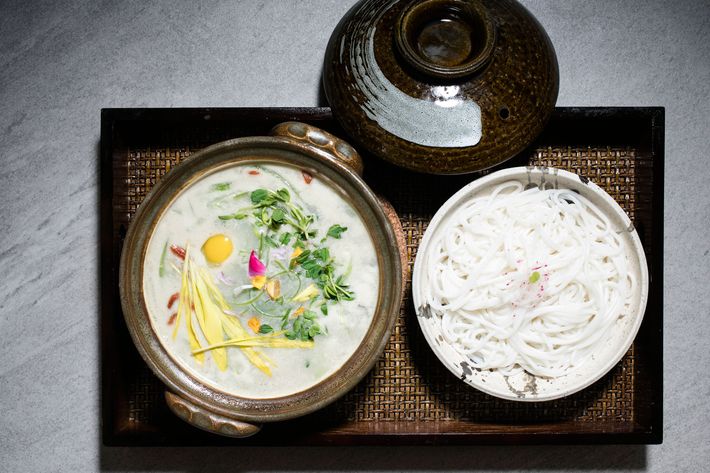
“These are next-level Hunan noodles,” said a woman at the next table, who noted that she was from the city of Hengyang, where Wang grew up, and was slurping her dinner dressed in a rakish summer straw hat. Rice-noodle devotees consider the lighter, white noodles to be more refined than the wheat-heavy, sauce-covered noodles up north, and the lady in the hat was enjoying what she called “the specialty of my hometown,” which was a bowl of steamy mi fen threaded with pickled vegetables and pork and topped with a single fried egg. Other elaborate home-style specialties that evening included the delicately milky “Fish Fillet” (its color comes from a combination of pork bone and fish broths) and the bountiful “Hometown Lu Fen,” which the kitchen constructs with layers of tofu and beef and char siu pork and serves, just like in the noodle stands around Hengyang, with a little saucer of fiery chile oil on the side.
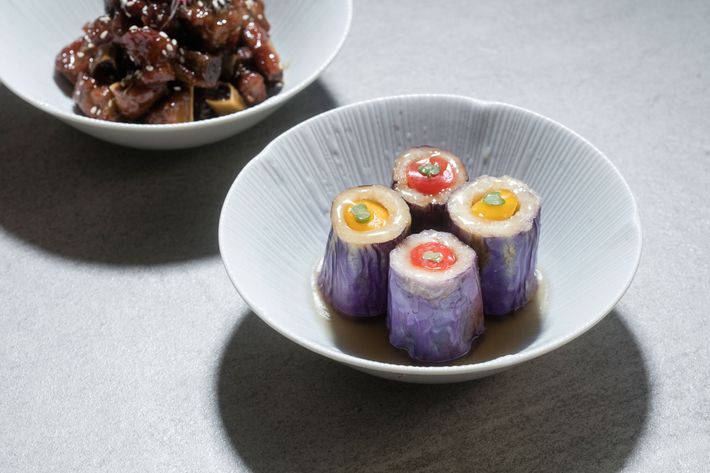
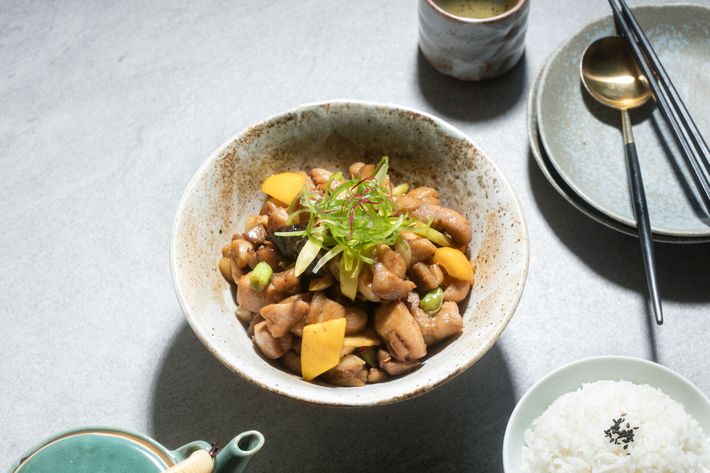
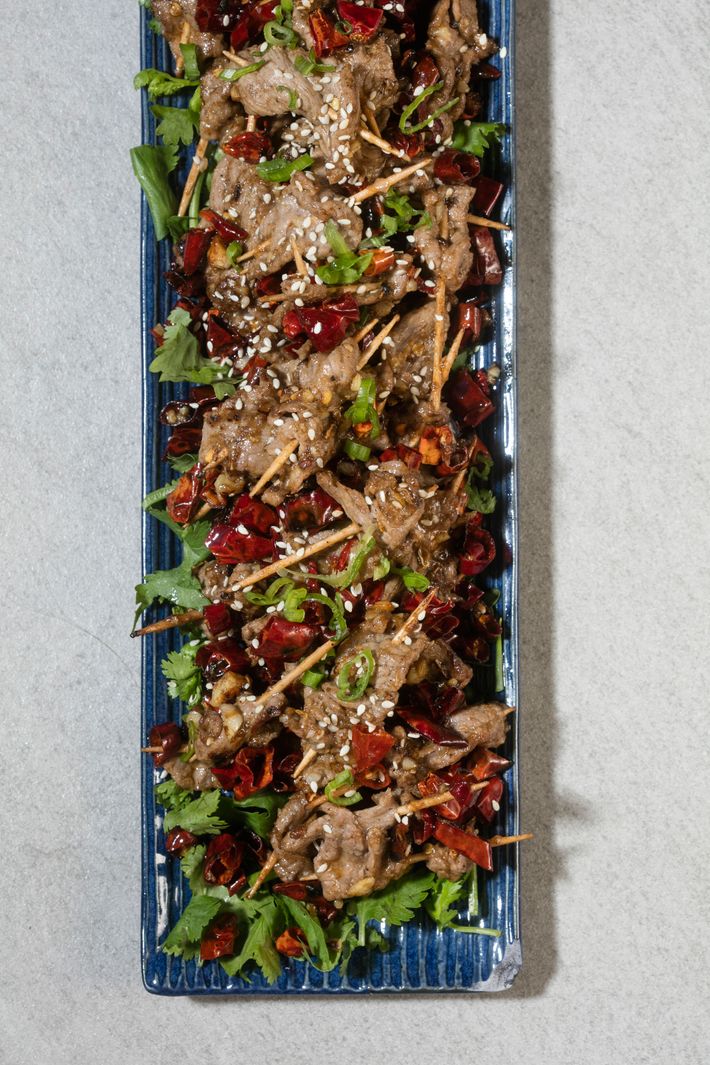
Hunan Slurp is much more than another random East Village noodle shop, however. If you don’t want to fill up on mi fen, it’s possible to make an excellent meal out of the artful, tastefully plated cold dishes alone, which, on the evenings I visited, included nuggets of bony sweet-and-sour spare ribs, helpings of cool cucumber poured with a tangy garlic vinaigrette, and dainty little towers of softly braised chicken feet tossed in chile oil and topped, like many of Wang’s creations, with a colorful garnish of edible flowers. His “Hunan Charcuterie” is an offal lover’s dissertation on the pleasures of Chinese-style cold smoked meats (you’ll find tripe, pig’s ear, and beef shank in the mix), and the more familiar hot dishes, like stir-fried chicken (tossed with bulbs of garlic and ginger) and pork with smoked bean curd, have the deeply flavored, just-cooked quality of a first-rate Chinese home kitchen.
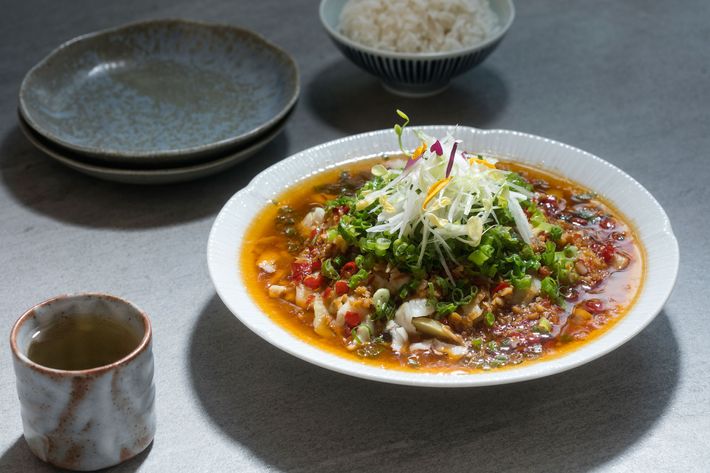
Wang在他的餐厅网站上充满了各种渴望的,普鲁斯特的协会,与旧湖南的市场和街头摊位相关,他的大部分高架家庭式烹饪显然是为像他这样的居家居民设计的。There weren’t many takers at my table for the small mountain of sweet, impressively peppery frogs’ legs that I ordered one evening (“These bones are a little creepy, Dad”), but the equally bony whole fish, which is purchased fresh in the morning and served in a dish brimming with a smooth, bracingly fiery chile sauce and crowned with green scallions and a mash of ginger and garlic, is worth a special pilgrimage. The traditional desserts — squares of almond jelly, cold mung bean, and barley soup — are designed to soothe the palate after these fireworks, but if you want to feel like you’re back in New York again, ask for the ice cream, which was flavored
with avocado when we ordered it, purchased down the street atIl Laboratorio del Gelato。
Hunan Slurp
112 First Ave., nr. 7th St.; 646-585-9585;Hunanslurp.com
Open:Lunch and dinner, Tuesday to Sunday.
Prices:$ 6至$ 38。
理想餐:Sweet-and-sour spare ribs, smashed cold cucumbers and/or Hunan charcuterie, “Fish Fillet” and/or “Hometown Lu Fen” mi fen, whole fish and/or stir-fried chicken.
笔记:没有卖酒执照,但一个高脚柜或太瓦o of Zywiec Polish beer from the bodega across the street is the perfect complement to your spicy noodles.
Scratchpad:高架湖南面条的一颗健壮的恒星;另一个用于下一级非野菜菜,其中一些值得一游。
*本文发表于2018年8月6日,发行纽约Magazine.Subscribe Now!